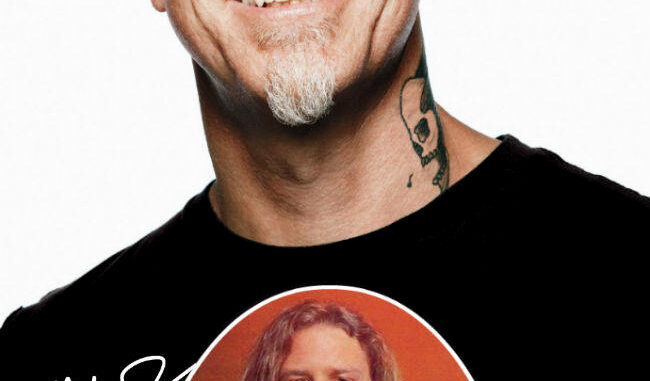
James Hetfield
The headline “End of an Era: James Hetfield Made Unexpected Statement Which Will Leave You Speechless” captures the mood these days—but let’s dig into what exactly has happened, what he said, and why it hits so hard.
Metallica frontman James Hetfield has made remarks that feel like a definitive turning point, not just for him personally but for the band as a whole. One of the more recent quotes:
“When I get up on stage, I feel so much more comfortable up there than I do in regular life … I feel like I’m so easily able to be me with these fans.” (BLABBERMOUTH.NET)
“There’s been a lot of darkness in my life and in our career … without darkness there is no light.” (Louder)
Even more strikingly, some sources suggest Hetfield has declared that retirement is not necessarily on the table—but that the idea of simply “carrying on as usual” is over. For example:
“Retirement is something that’s been forced onto people… I don’t believe musicians are allowed to retire!”
There is also an announcement attributed to him (though its veracity is uncertain) about stepping back due to health concerns, signaling “the end” of what we’ve known as the classic era
- Longevity & Legacy: Hetfield co-founded Metallica in the early 1980s, and for decades he’s been the voice, the riff-machine, the public image of the band. Any major shift in his tone or outlook reverberates widely.
- Emotional Honesty: His recent statements are more vulnerable than the “rock star bravado” of the past. He’s openly talking about darkness, growth, identity. That kind of candidness often signals a turning point.
- Shifting Purpose: When Hetfield says things like “we’ve lived our dream for over forty years” and “now it’s time to say thank you the only way we know how – with one last ride,” (a line attributed in fan-circulated coverage) it signals that the band is consciously closing one chapter. (bbngist.com.ng)
- Health & Realities of Touring: The music-industry condition of “always on the road” is physically and mentally tougher now than it was in earlier decades. The suggestion that health concerns might force change makes the “era” feel like it’s drawing to a close.
- Cultural Shift: Metallica—and Hetfield specifically—aren’t just band members; they are icons. When icons shift, so does a cultural landsca
The “unexpected” part lies in a few layers:
- Fans are used to Hetfield being the unflinching riff-lord, the person who “just rocks.” But here he’s reflecting deeply, even maybe stepping back.
- The ambiguity: he’s not saying “We’re done,” but he is saying “We’re changing.” That liminal space is unsettling in a good way.
- The balancing act of legacy vs growth: he seems to reject being a “legacy band that just plays the greatest hits” while at the same time acknowledging the weight of their past. (Reddit)
- For many fans, this may mark the last time they experience Hetfield in “peak-mode” touring and energy; that realisation hits differently
- Because this is not just about music—it’s about time passing, identity changing, life evolving.
- It’s a moment where you realise icons are human, aging, adapting.
- The symmetry: someone who once screamed defiance is now reflecting, considering calm, purpose beyond the stage.
- The collective memory: for millions of fans, Hetfield’s image is tied up with late nights, blasting guitars, youthful rebellion. This feels like a farewell to that r
- The band may reduce touring, scale back production, or shift formats.
- Music could become more introspective, less about volume and shock, more about meaning and legacy.
- Hetfield might focus on mentoring, songwriting, side-projects rather than demanding world tours.
- Fans may need to adjust expectations: maybe fewer concerts, fewer surprises, but deeper connection.
- The “era” of My Metallica might become “Our Metallica” — the dynamic changes from dominating arenas to shared memories
What we’re witnessing is more than a quote—it’s a marker. When someone like James Hetfield pauses, turns reflective, acknowledges the end of one thing and the beginning of another, it resonates. It reminds us that every chapter ends, every hero changes, and every fan eventually looks back with a bittersweet mix of gratitude and nostalgia.
Whether this is the literal end of touring-as-we-knew-it, or a symbolic shift, the moment is meaningful. Young fans will know Hetfield differently than the die-hards; long-time fans will feel the weight of “what was” and “what’s next.” And perhaps, that is what leaves you—and many others—speechless.
If you like, I can dig up full transcripts of his recent interviews and we can pull out all the statements that suggest this turning point.
Leave a Reply